17 October 2026
You lost a back tooth. You can’t see the gap when you smile. So, do you really need to replace it?
This is a question many patients ask after losing a molar. Since it isn't visible, replacing it may not feel urgent. When they do consider treatment, the next question is usually: Should I get a dental implant or a dental bridge?
Both can replace a missing tooth and restore chewing function. But there is one important difference that often gets overlooked: what happens to the jawbone underneath the missing tooth?
If you're comparing a dental implant vs bridge for a missing back tooth, here's what you need to know before making a decision.
Why Does the Jawbone Shrink After Losing a Tooth?
Your teeth do more than help you chew. Their roots transmit forces to the surrounding jawbone, helping maintain the bone in that area.
When a tooth is lost, the bone that previously supported its root no longer receives the same stimulation. Over time, the jawbone in that area can gradually shrink.
This process is called bone resorption. It can begin after tooth loss and varies from person to person.
The important point is that replacing the visible part of a tooth does not necessarily replace its root or preserve the bone underneath it.
Dental Implant vs Bridge: What Is the Difference?
Option 1: Dental implant
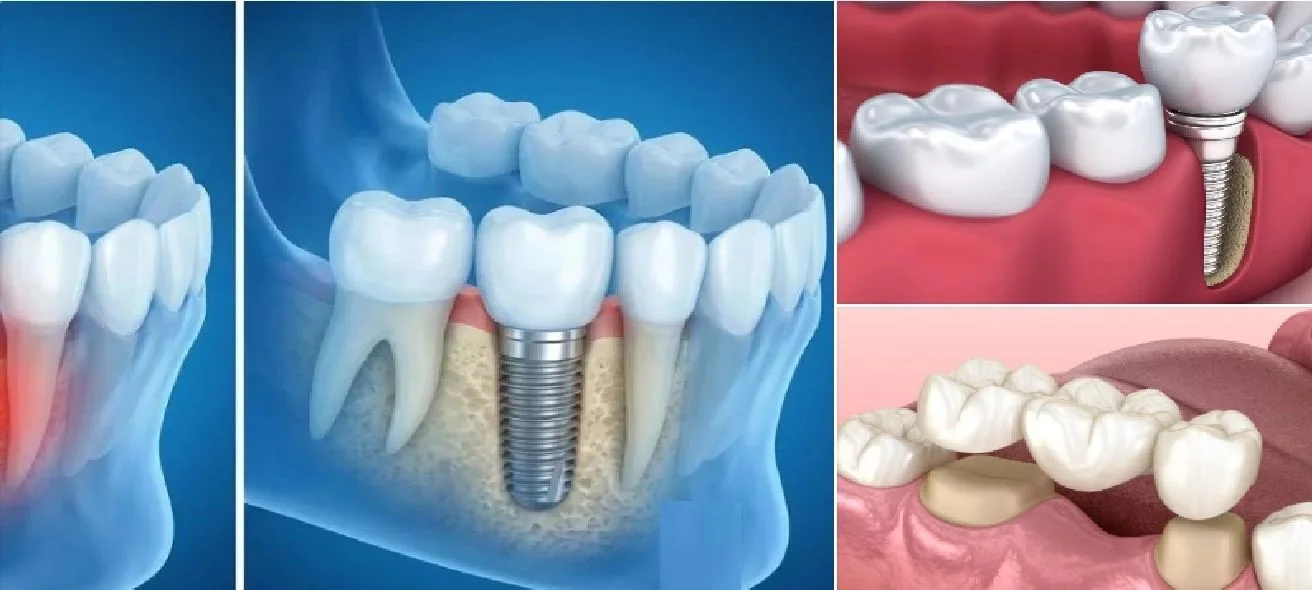
A dental implant is a small post placed in the jawbone to replace the missing tooth root. Once it has integrated with the bone, a crown is attached to restore the visible tooth.
Because the implant functions as an artificial root, it transfers chewing forces to the surrounding bone and can help preserve bone at the implant site.
Another advantage? A single-tooth implant usually does not require the neighbouring teeth to be trimmed.
However, implants involve surgery and require sufficient bone, healthy gums and an assessment of your overall health. Some patients may need additional procedures, such as bone grafting, before an implant can be placed.
Option 2: Dental bridge
A traditional dental bridge replaces the missing tooth by attaching an artificial tooth to crowns supported by the neighbouring teeth.
It can restore chewing function without implant surgery, and treatment is often completed more quickly.
But there is a catch.
The teeth next to the gap generally need to be reshaped to support the bridge. And although the artificial tooth fills the gap, a traditional tooth-supported bridge does not replace the missing root.
As a result, the jawbone directly beneath the missing tooth can continue to shrink over time.
Bridges can still be an excellent option in the right situation, especially when the neighbouring teeth already need crowns.
Which Protects Your Jawbone Better?
For preserving the bone at the missing tooth site, a dental implant generally has the advantage.
An implant replaces the root as well as the crown, helping maintain bone through functional loading. A conventional bridge replaces the crown but leaves the underlying bone without a tooth root.
However, an implant does not guarantee that all bone loss will stop. Some bone remodelling can still occur around implants, and long-term success depends on proper placement, gum health, oral hygiene and regular follow-up.
Also, a bridge is not a bad treatment simply because it does not preserve the bone in the same way. The right choice depends on the entire mouth—not just the missing tooth.
Does a Missing Back Tooth Really Need Replacement?
Even if the gap is invisible, a missing molar can affect your oral health and chewing function.
Depending on the tooth and your bite, you may experience:
Difficulty chewing comfortably on that side.
Shifting or tilting of neighbouring teeth.
Changes in how the upper and lower teeth meet.
Food trapping in the gap.
Progressive bone loss at the missing tooth site.
These changes do not happen identically in every patient, and not every missing tooth requires the same treatment. But leaving a gap without assessment can mean missing the opportunity to plan for long-term oral health.
A back tooth may be out of sight, but it should not be out of consideration.
When Is a Dental Bridge a Better Choice?
An implant is not automatically the best option for everyone.
A bridge may be worth considering when:
The neighbouring teeth already have large fillings or need crowns.
You want to avoid implant surgery.
Your bone or medical circumstances make implant treatment unsuitable at present.
You prefer a treatment that can often be completed in a shorter time.
The overall clinical and financial considerations favour a bridge.
A bridge can provide reliable function when properly planned and maintained. The key is ensuring that the supporting teeth are healthy enough to carry the additional load and can be cleaned effectively.
When Is a Dental Implant Worth Considering?
An implant may be particularly attractive when:
The neighbouring teeth are healthy and you want to preserve them.
You want an independent replacement for a single missing tooth.
There is sufficient bone, or bone augmentation is feasible.
Your gum health and general health support implant treatment.
You are prepared for the healing period and long-term maintenance.
Implants may take longer from placement to final restoration than bridges. They also require regular professional reviews and careful cleaning. They are not immune to gum inflammation or other complications.
The decision should be based on a clinical examination and appropriate imaging—not simply on which option is more popular.
So, Implant or Bridge: What Would I Recommend?
I would never recommend an implant just because implants are considered a modern solution. Nor would I recommend a bridge simply because it is quicker.
I would first look at the condition of the neighbouring teeth, the amount of available bone, the patient's bite, gum health, medical history and long-term expectations.
If the adjacent teeth are completely healthy, an implant may offer the advantage of replacing the missing tooth without cutting down those teeth, while also helping preserve the bone at the site.
If the adjacent teeth already require crowns, a bridge may make more sense.
The best treatment is not the one that replaces the tooth fastest. It is the one that makes the most sense for your long-term oral health.
If you have a missing back tooth, get it assessed before deciding that the gap is harmless—or committing to a replacement.
Frequently Asked Questions
1. Is a dental implant better than a bridge for jawbone preservation?
Generally, yes. An implant replaces the tooth root and helps maintain bone at the missing tooth site. A traditional bridge replaces the visible tooth but does not replace its root.
2. Does a dental bridge cause jawbone loss?
The bone beneath the missing tooth can continue to shrink because the root is no longer present. This is related to tooth loss itself; the bridge does not directly replace the missing root.
3. Can I leave a missing back tooth untreated?
That depends on which tooth is missing, your bite and your oral health. A dentist can assess the risks of leaving the gap and explain suitable replacement options.
4. Is a dental implant always better than a bridge?
No. An implant may preserve the bone and neighbouring teeth, but a bridge can be appropriate when adjacent teeth need crowns or implant surgery is unsuitable.
5. How do I decide between a dental implant and a bridge?
Your dentist should evaluate your neighbouring teeth, bone levels, gums, bite, medical history, treatment timeline and budget before recommending an option.
The Bottom Line
A dental implant and a dental bridge can both restore a missing back tooth—but they do not affect the jawbone in the same way.
An implant replaces the root and can help preserve bone. A traditional bridge replaces the tooth without replacing its root.
If you have lost a molar, don't choose based on appearance alone. Consider your bone health, neighbouring teeth and long-term needs before deciding.
Your dentist can help you determine which option is suitable after a clinical examination and appropriate imaging.